JOBMUST

Friday, September 27, 2019

😲 Unusually Good Reasons To Use A Smart Resume Builder

The many benefits of using a smart resume builder and how it can save you time, sweat, and blood.

Amish barn-raising
Photo by Randy Fath

This is a guest post by Max Woolf.

Say hello to Olivia. She’s a hiring manager on the lookout for stellar hires.

Next to her is a battered PC and a pile of 250+ resumes (that’s what a corporate job opening attracts on average.)
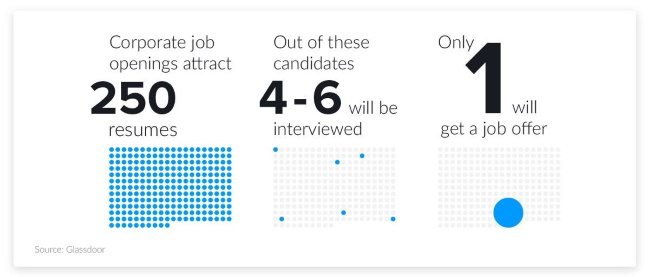
Each corporate job opening attracts 250 resumes

Finally, she picks yours.

A glance here, a glance there and in the resume black hole trash your resume goes.

Arrrgh.

But why?!

In short, it didn’t look professional and was hard to read. That made Olivia go with another candidate.

Don’t stress.

Take a deep breath, you're just a scroll-down away from learning how a resume builder can win recruiters and tip the scales in your favor.


Note: There is a poll embedded within this post, please visit the site to participate in this post's poll.

Free bonus: The One Resume Resource You’ll Ever Need is a handy reference to make your resume get you more job interviews. Download it free now

3 Benefits of Using an Online Resume Builder

1) Save time making your resume look great

Here’s the thing:

Finding a job is a race against the clock. The sooner you land your dream job, the better your life will be.

Problem?

Most people are clueless about how to lay out a resume solo. They’ll have to spend every ounce of their energy to research:

  • Which sections to include in a resume?
  • How long should a resume be?
  • How to pick the right font and what’s the best font size for a resume?
  • Should you save your resume as a Word Doc or PDF?

But—

If you take advantage of the benefits of using a resume builder, you won’t have to worry about any of that.

Most builders come standard with professional templates, fonts, recommended resume sections, and much more.

As a result, it'll help you save hours worth of research time and let you focus on the critical part of your resume right from the get-go—the content.

2) Apply for more jobs

Did you know that a whopping 75% of recruiters use an applicant tracking system (ATS) to weed out bad candidates on autopilot?

What’s an ATS, exactly?

It’s special software that checks resumes for keywords and compares them against the job ad before your resume reaches the human eye.

So—

If you don’t tailor your resume to match each job ad, your chances of employment will drop off a cliff.

Problem?

If you use MS Word templates, they’ll almost always break when you try to edit or change them.

Need to add more skills and preserve the formatting? You’re doomed.

One of the benefits of resume builders, on the other hand, is that they are designed for this job.

Just throw whatever skills or certifications you need for a specific role, and smart formatting algorithms will take care of the rest.

As an added benefit, most builders will give you a friendly dashboard with your resumes (+ previews) all in one place for easy navigation between different resume versions.

3) Easy converter between resume file formats

Nightmare scenario:

You come across a tempting job offer with sky-high pay and more benefits than Fortune 100 organizations can offer.

You spend one hour tailoring your resume to make sure it fits the job description like a plug in a socket.

But—

Before you hit “submit application”, a line in the job description catches your eye.

It says, “Please submit your application in .doc format.”

Problem?

You created your resume with the intent of sending it in PDF (not .doc), so you didn't pay much attention to how it looked in Word.

As a result, you had to waste another hour to reshape your resume (to make sure it didn’t look off-kilter), which you could’ve otherwise used to apply for 1-2 extra jobs.

Argh.

The good news?

A smart resume builder can save your resume in any file format within seconds and give you the peace of mind the layout won’t get skewed.

On top of that, you’ll be able to choose a format within the builder without having to Google a legit converter online that won't potentially steal your data, and then save the document using a resume file name best practice.

There you have it.

A whopping three surprising benefits of using a resume builder in 2019.

Question of the article

Have you ever used a resume builder? If not, why not? If yes, what frustrated you most about it? Tell us in the comments.

What others are saying

Resume Tips 2019: 3 Steps to a Perfect Resume

Free Bonus

If you want a handy resume and CV resource that you can keep on your smartphone or print out for easy reference, this special bonus is for you.

This free download contains:
  • 111 Smart Resume Section Headings and Titles
  • 60 Resume Achievement Writing Ideas and Expressions
  • 500 Positive Resume Action Verbs That Get Job Interviews
  • 35 Resume Filenames Recruiters Won’t Respond To

Click the image below to get access to The One Resume Resource You’ll Ever Need: The One Resume Resource You'll Ever Need download button

JobMob Insiders can get this free bonus and other exclusive content in the JobMob Insider Bonuses area. Join now, it's free!

READ NEXT: 7 Easy To Use Websites For Virtual Resumes and Portfolios

About the author

Max WoolfMax Woolf is a career expert at Zety. He’s passionate about helping people land their dream jobs through the expert career industry coverage. In his spare time, Max enjoys biking and traveling to European countries. You can hit him up on LinkedIn.

Subscribe to JobMob via email and follow me on Twitter for more ways to get the best out of resume builders online.


via JobMob More Information Here..
via JOBS MUST Check this Job Here

Thursday, July 18, 2019

👶 How To Clearly Explain Losing Your Job To Kids

The best way to tell your family you lost your job.

2 happy kids, one grumpy kid

My own layoff story
I was last laid off in early 2006.

At that time, I had 2 kids aged 3 and 2. To me they seemed too young for the layoff to have much meaning in their eyes, but I was wrong.

Before the layoff, my kids barely saw me each weekday. I would leave for work early and come home as they were getting ready for bed, or later.

After the layoff, they saw me all the time. My new job – the job search – gave me the flexibility to take the kids to school and pick them up afterward while still networking, getting interviewed, etc.

My wife and I didn't make a big deal of the change, and to be honest, we didn't really spend much time thinking about whether that was the best way to react. We just told the kids that I would working from home from now on and they took it in stride. Or “Yay!” as they put it.

Looking back recently, I was curious to hear what child experts would say.

Free bonus: The Midlife Job Search Report is a handy guide I compiled for older job seekers. Download it now.

Be honest and patient
Russell Friedman, former Executive Director of The Grief Recovery Institute Educational Foundation, blogger for Psychology Today and co-author of 3 books including When Children Grieve, suggested:

  • Adults—you go first. Telling the truth about your own feelings about your work situation will make it safe for your child to open up about his or her feelings.
  • Remember that each of your children is unique and each has a unique relationship to the loss event or situation.
  • Be patient. Don’t force them to talk about it.
  • Never say “Don’t feel sad” or Don’t feel scared.” Sadness or fear are the two most normal feelings in reaction to loss or change of any kind. They are also essential feelings to being human.
  • When they do talk, listen with your heart not your head. Allow all emotions to be expressed without judgment, criticism, or analysis.

React carefully
Dr. Elizabeth R. Lombardo, Ph.D., M.S., P.T. and author of “A Happy You: Your Ultimate Prescription to Happiness,” says:

We often assume that children will be so worried if Daddy is not working, but that is not the case. What causes them stress is parents’ reaction to Daddy’s unemployment.

Unlike parents, children are not calculating the cost of the mortgage and monthly bills, stressed that they cannot be paid. They are not tormented by fears that they may never get another job, or at least not before they lose their home. Children are much more in the here and now. So what is important to them is (1) Daddy is now home to play with me and (2) how Mommy and Daddy are feeling.

Children can be incredibly intuitive. They may not understand why parents are stressed but they can sense something is wrong if you are.

So, how do you tell your young child that their father is unemployed? Try something like “Daddy is not working right now. He will be getting another job soon. Now he is going to focus spending some time playing with you.” You can even highlight some things they might do together (read book, go to the park, play ball…)

More importantly than what you say, though, is your reaction. Try to address your stress level- what you outwardly say and do as well as how you feel inside. Again, children can sense your stress, which then can cause anxiety for them.

Have the right attitude going forward
Vicki Hoefle, 20 Year Parent Educator, Mother of 5 teens and creator of Parenting On Track™, recommends:

  • Children follow their parents lead so attitude is everything. You convey your confidence or lack their off with not only your words, but your voice, tone, body language and eye contact.
  • Children can feel a parents' confidence and take their cues from this.
  • As you explain the “change” in employment, the details will not be as important as your attitude about this change.
  • Most children can not comprehend the idea of work, let alone the idea of unemployment. Narrow this down and talk about it from the child's perspective. Think about how this might impact the child's life. Maybe you will be home in the morning to take them to school. Maybe you will be home at night to have dinner with the family. It isn't as important to talk about the fact that you may have less money to spend on eating out, kids don't pay attention to that. Talk about the tangible changes your children will notice.
  • Children do not need updates. They only require that when a significant change, like another job, or moving because you have to sell the house, is explained to the extend that they can assimilate the information. Again, your attitude of “things will be fine, I know what I am doing” is the only thing that matters to young children.
  • So curb the desire to tell the kids everything. Use discernment and community a sense of confidence and security to your children during this transitional time.

Involve children at their level
Heather Davis Richards, former VP of Public Affairs for financial education company Essential Knowledge, tells:

Little kids are very resilient to change. They can actually be a huge asset to the family, with their eagerness to be involved. We have seen children all over the world work to raise money for cancer victims, animal rights, and other topics that seem overwhelming. So when it comes to a layoff in the family, it’s best to get them involved at a level they can understand.

First, discuss with your spouse privately, how you both intend to deal with the situation. What budget cuts will need to be made? What changes will that mean? We planned in advance, what the job loss would mean to the family, and how we would cope with the situation. In our family, when my husband was laid off, we decided to cancel after school childcare to save money.

The two biggest questions that children have with this type of situation are, “how will this impact me?” and “should I be scared about this?”

When we discussed it with our seven-year-old, we made sure to stress that everything was going to be fine. There would be changes for awhile, and we made sure to state upfront how that might impact her. She was actually overjoyed at some of the decisions. She was thrilled to be able to ride the bus after school, for instance.

We also asked for her help. We asked for her to help us to look for ways to save money while looking for a new position. She offered to forfeit her allowance, and had many creative ways that we could have inexpensive fun on the weekends. When her birthday rolled around, she came up with the idea for a party at home to cut costs. Don’t be afraid to enlist your children’s help, it empowers them that they are a part of the solution.

Takeaway lessons

  • Decide with your spouse how the family should cope with the post-layoff situation
  • Tell your family about the layoff without going into details
  • Assure your children that everything will be ok (easier said than believed, I know)
  • Involve your children in any lifestyle changes, such as cost-cutting

Question of the article

What about you: how have you dealt with unemployment in your family? Tell us in the comments.

Free Bonus

The Midlife Job Search Report is a handy guide I compiled to help older job seekers.

This free download contains:
  • 5 Common Mistakes Older Job Seekers Make
  • How To Defeat Any Form of Job Search Discrimination
  • How Older Job Seekers Beat These Common Stereotypes
  • 9 Scary Reasons Overqualified Job Seekers are Rejected
  • 40 Tips for Older Job Seekers That Actually Get Results
Click the image below to get access to The Midlife Job Search Report: The Midlife Job Search Report

JobMob Insiders can get this free bonus and other exclusive content in the JobMob Insider Bonuses area. Join now, it's free!

READ NEXT: Recently Laid Off? Here’s A Quick Job Search Refresher Guide

Subscribe to JobMob via RSS or email and follow me on Twitter for more ideas on how to deal with unemployment in the family.


via JobMob More Information Here..
via JOBS MUST Check this Job Here

Friday, June 21, 2019

🤑 How To Evaluate New Job Offers

For best results, negotiate with yourself before negotiating with employers.

Man with coffee motioning for cash

This is a guest post by Joey Trebif.

We've all been there.

We make the decision that it's to time leave our current employer and look for another job.

Once you've started your job search, you've cut the emotional ties and now it's just a matter of time until you get the right job offer and then you are on your way.

But what happens if you were not actively looking for a job?

Suppose you were as happy as a pig in **** and then a request for a job interview comes knocking on your door? You go on a few interviews and then you get a job offer you were not planning on.

A job offer as a result of proactive job search is, in a way, a little easier to handle than a job offer that is unsolicited (i.e. when you were not actively looking for a job). In that situation, it can be tough deciding between a job offer and your current job.

A case in point: a friend of mine was happy in his job. The hours were flexible and the pay was good. He liked his boss, liked the people he was working with and was happy with his responsibilities. Then a friend of his told him about a great opportunity at another company. Long story short, he went to the interviews and actually got a job offer, which challenged him to make a decision he was not prepared to make.

I'm a big believer in “it never hurts to listen” even if you were not looking for a job change, but you need to be prepared for the outcome before the big event.

Note: There is a poll embedded within this post, please visit the site to participate in this post's poll.


What to consider before accepting a job offer

1) Compensation

While compensation should not be the single driving factor of your job search, it is certainly in the top two or three considerations (who wants a new job for less money?).

Your job offer will obviously include your salary and bonus details. Prior to your offer, you should have done some homework on the current market rates for your position. While this is not a hard and fast rule, you will have developed some ranges as to what to expect. If you did not do this prior to the offer, it's never too late to take a look.

Hopefully, the offer meets or exceeds your expectations. Whichever way it goes, you should consider the following:

  • Too much of an increase – sounds like a nice problem to have, but if your offer is significantly higher than your current compensation (greater than 25%), it might be a cause to worry. Excessively high compensation offers are often signs of a bigger issue. This is where your due diligence homework comes in (salary surveys and reviews). Try to find someone in your network that has some inside information about the department/position you've been offered.
  • Salary increase is too low – while there is not a set percentage increase that you should expect when changing jobs, the job offer should reflect the risk of changing jobs. If you are leaving a current job, as opposed to looking while unemployed, there is a fair amount of risk. Less than a 10% increase might be an issue, but consider the below 9 points along with the compensation piece before making a decision.
  • Potential – there should be reasonable upside potential in your future compensation at your new job. You should ask some questions regarding annual compensation or performance reviews. You should also consider where you fall on the low/high compensation range for your role. Where you fall on the salary range will drive upside potential. If you are already earning at the top of your range, the prospect of significantly higher increases will be somewhat lower.
  • Variable compensation – you should also consider any variable compensation such as bonuses, overtime pay and sales commissions where relevant.

2) Future Advancement

The potential for advancement should have been one of the questions you asked during the interview process. The size of the company, your role, your performance and the size of your department all play a key part when evaluating future growth.

Regular performance reviews (another question that should be asked during the interview process) also play a key factor. Not to worry, if you did not ask these questions during the interview process it is not too late. The job offer negotiation process (more on that later) is a bit of a give and take (hopefully ‘take,' for you).

3) Organizational Structure

You should fully understand the organizational structure of the company. If this was not made clear during the interview process, now is the time to clarify this. You should clearly understand:

  • Who you will report to: your manager and reporting line should be clearly defined in your job offer. How many bosses will you have? Who does your boss report to?
  • Who works for you: How large is your staff? Are there any issues to consider?

4) Expectations

Ask the question – “After one year on the job, I've been very successful and have exceeded all expectations. What have I achieved in the year?”

You need to fully understand expectations. What is expected, what must be delivered and what are the obstacles you will encounter?

5) Training

How long will it take you to “come up to speed”? Will some training be provided? Will you need to “hit the road running”?

Depending on your level of experience and position in the new company, there will be some expectation that you can come up to speed quickly. You need to ensure that those expectations are reasonable.

Don't get yourself into a “no win” situation.

6) Stability

What happened to the previous person in the role?

More likely than not, you will be taking a position that belonged to someone else. If you are lucky, the person who had the role before you was promoted and that's why the position is available. But if the person left the organization, you need to understand why they left or were asked to leave.

This is a great time to leverage your network to see if anyone you know can help you find out the details. You should also feel comfortable with the department's and company's turnover.

7) Benefits

Sounds basic, but make sure you fully understand your benefits. While not directly “compensation”, the value of benefits provided (or any shortfalls to what you currently have) can have a huge impact on your net gain over your current role/company.

  • Medical and dental
  • Vacation, sick days and personal days
  • Pensions, 401k plans, matching savings plans
  • Work environment – flexible work environment (hours and work from home)

8) What You Can Negotiate

Don't be afraid to negotiate!

Compensation is always up for negotiation. Vacation is also a somewhat easy benefit to negotiate. Benefits are probably not negotiable.

Make sure you balance your requests, as pushing too hard could end the offer. On the other hand, don't settle and be prepared to walk away if you feel the offer falls short.

9) Comparison With Your Current Job

Is the grass always greener on the side?

Items 1 through 8 should help you make your decision but the good old “pros and cons” list is the best way to go.

Make a list of everything you are giving up in your old job and everything you stand to gain in the new job. Be honest with yourself and your pros and cons list will help you make this difficult decision.

10) Counter-offers

Counter-offers are very common. My own personal view is that if it takes a resignation to have your current employer offer what the new company is offering – and many times, more than what is being offered – then it is too late.

On the other hand, a counter-offer generally means that you are highly regarded and that they don't want to lose you.

If you receive a counter-offer, review the reasons you decided to search for a new job and check that you'd be comfortable with staying (you don't want to be looking for a job again in six months).

Life is a journey and your decision is just one more step in that journey. There is no such thing as a “bad decision”, there is no looking back, only looking forward.

Whatever you decide, good luck in your search.

Question of the article

What's the first thing you considered the last time you received a job offer? Tell us in the comments.

What others are saying

About the author

CareerAlley logoJoey Trebif is a senior finance executive from the New York area who has extensive experience in job search and career advice. Joey blogs about career advice, job search advice and job search site reviews at CareerAlley.com and can be found on Twitter at @CareerAlley and LinkedIn at https://www.linkedin.com/in/careeralley?utm_source=rss&utm_medium=rss.

This article was part of the The $11K 8th Annual JobMob Guest Blogging Contest.

READ NEXT: Should You Always Reject the First Offer For a Job?

Subscribe to JobMob via RSS or email and follow Jacob Share on Twitter for ideas on how to get multiple job offers.


via JobMob More Information Here..
via JOBS MUST Check this Job Here

Friday, March 15, 2019

🖋 How To Follow Up After Job Interviews With Great Follow-ups

Is it follow-up or follow up or followup? How you follow up after an interview is more important than you think.

Man writing a letter

Photo by Helloquence

This is a guest post by Carolyn K.

You wouldn’t take a pretty girl on one date and expect her to do all the work of getting in touch with you for a second date, would you?

I don’t care how charming you are. That’s a recipe for a lonely night.

The same line of thinking applies to job hunting. If you walked out the door of your job interview and thought that was the end of it, think again.

The follow-up is an oft-misunderstood art form. Too often a job is lost because a well-qualified applicant displays no more interest in the job as soon as the door to the HR office closes behind them.

Note: There is a poll embedded within this post, please visit the site to participate in this post's poll.

Free bonus: The One Job Interview Resource You’ll Ever Need is a handy reference to help you prepare for any kind of job interview. Download it free now

5 tips to master the art of the job interview follow-up

1. Ask for a business card

Do not leave the interviewer’s office without getting a business card.

If the interviewer asks if you have any questions for him/her, make sure you ask for a business card. This will be crucial to the ensuing steps.

2. Send a follow up thank you email after interview

When you get home from the interview, shoot off a follow-up email to the interviewer, thanking him or her for his time and expressing your interest in the job, again.

This will show the interviewer that you’re serious about working with the company and will probably separate you from half the field of candidates who did not take time to take this action.

3. Then send a thank you letter

You should also utilize snail mail to show the interviewer how serious you are. While emails and phone calls can come across as somewhat cold forms of communication, handwritten notes are warm.

In your note, thank them for their time and address a few of the things you discussed in the interview.

For instance, if the interviewer mentioned that the company is looking for goal-oriented people to take on a new project, mention how you have exercised and demonstrated your ability to achieve goals. Tailor the letter to the company you’re sending it to.

job interview followup

4. Call for a status check

One week after the interview, call the interviewer’s office and ask about the status of the job search. If you can’t speak with the interviewer, leave a message on their phone.

One week after that, send another follow up email to the interviewer basically asking the same thing.

5. Don't overdo it

It is possible to come off as overly pushy. The fact is that the HR rep you talked to might be very busy with a lot of new hires. Do not cold call or email more than once in a week. Give them time to respond and when you’re on the phone with them, be courteous and do not simply ask, “Did I get the job?”

The follow-up (call or email) is a great tool in the interviewing process. It can separate the winners from the losers in the hunt for employment, but it will only help if you do your initial homework on the company and properly prepare for the first interview.

Finally- follow up: one word or two? Is it follow-up or follow up? According to Writing Expert Lynn Gaertner-Johnston, only when using the term as a verb is there NO hyphen e.g. “to follow up” is correct use.

What others are saying

Question of the article

Which follow-up tactic has worked best for you? Tell us in the comments.

About the Author

carolyn k portraitCarolyn is a guest blogger who writes about the job market, LPN programs, and resume workshops.

READ NEXT: How to Quickly Recover From Bad Job Interviews.

Free Bonus

If you want a handy job interview resource that you can keep on your smartphone or print out for easy reference, I’ve got a special bonus for you.

This free download contains:
  • 130 positive personality adjectives to describe yourself
  • 444 of the most popular job interviewer questions to prepare yourself with
  • 175 questions that you can ask in job interviews to make a good impression and learn about your future employer
Click the image below to get access to The One Job Interview Resource You’ll Ever Need: The One Job Interview Resource You'll Ever Need download button

JobMob Insiders can get this free bonus and other exclusive content in the JobMob Insider Bonuses area. Join now, it's free!

Subscribe to JobMob via RSS or email and follow me on Twitter for more ideas on getting job offers from job interviews.


via JobMob More Information Here..
via JOBS MUST Check this Job Here

Friday, March 8, 2019

💪 What Does “Vouch” Mean And What It Means To You

A quick way to be truly appreciated. So how does it work?

What Does Vouch Mean And What It Means To You

Photo by Edu Lauton

Which of the following scenarios is more powerful?

1) You meet someone at a networking event, and introduce yourself and what you do.

2) You meet someone at a networking event, and while you're talking, an unexpected 3rd person joins the conversation if only to say how much they appreciate what you do.

That's the power of vouching for someone.

At a local Internet conference a few years back, I struck up a conversation with one of the speakers after their talk ended and the auditorium had emptied. I liked what he had to say, and was surprised to learn that he was also from my original hometown of Montreal.

As we were chatting, another attendee came into the auditorium, immediately noticing us near the door. The attendee came over and immediately told my conversation partner, the event speaker, how much he liked JobMob. I in turn introduced him to the speaker.

The speaker was clearly impressed.

Note: There is a poll embedded within this post, please visit the site to participate in this post's poll.

That's how to vouch

Here's why the vouching worked so well.

You rock! You rule!

Relevant

Our conversation took place at an Internet conference, and the attendee (the “vouch-er”) was recommending a website (this one).

True

While it's debatable whether an opinion can really be true or false, if it can be confirmed by reliable sources, it's probably true.

Honest

The attendee's vouching was really what he thought and not the result of some preconceived marketing plan, and there was no incentive involved.

Unexpected

I hadn't beckoned to the attendee, who clearly came over of his own volition because he felt so compelled to share his opinion.

Credible

The speaker had already met the attendee earlier at the same event, so the attendee was a (somewhat) known entity whose credibility could be trusted. The fact that I – the “vouchee” – was present and actually knew the attendee also gave him credibility. Being present also gave me an opportunity to reinforce the recommendation.

How vouching is win-win-win

The vouchee – obvious, this is the person on the receiving end of a recommendation.

The voucher – people simply appreciate people who honestly vouch for others in an unsolicited way, as if they might turn around around and vouch for them too at some point. This builds the brand of the voucher as someone worth knowing.

The listener i.e. receiver of the vouching – they've just met not one, but two people seemingly worth knowing.

Vouching works best in person, but can also be effective online, such as on social media:

Question of the article

Who have you vouched for recently? Or, what's your most memorable vouching story? Tell us in the comments.

I originally published a version of this article on the terrific Personal Branding Blog.

Subscribe to JobMob via RSS or email and follow me on Twitter for more ideas on how to build relationships on your job search.


via JobMob More Information Here..
via JOBS MUST Check this Job Here

Thursday, February 21, 2019

🎬 77 Brilliant Celebrity and Celebrity Wannabe Acting Resumes

Learn how to make an acting resume from famous actors.

77 Brilliant Celebrity and Celebrity Wannabe Acting Resumes

Photo by Thomas William

Acting resume examples and samples to inspire new actors and old

Jump directly to a section:

It’s all in the credits…
​

Superheroes
Tom Holland's resumetom holland acting resume Tom Hiddleston's resumetom hiddleston acting resume
James McAvoy's resumejames mcavoy acting resume Tom Hardy's resumetom hardy acting resume
Ezra Miller's resumeezra miller acting resume Tilda Swinton's resumetilda swinton acting resume
Game of Thrones
Natalie Dormer's resumenatalie dormer acting resume Iwan Rheon's resumeiwan rheon acting resume
Kit Harington's resumekit harington acting resume Rose Leslie's resumerose leslie acting resume
Richard Dormer's resumerichard dormer acting resume Lena Headey's resumelena headey acting resume
Harry Potter
Alan Rickman's resumealan rickman acting resume Rupert Grint's resumerupert grint acting resume
Comedians
James Corden's resumejames corden acting resume Stephen Fry's resumestephen fry acting resume
Bobby Mair's resumebobby mair acting resume Katherine Ryan's resumekatherine ryan acting resume
Get your own
jonathan carter actor resume Ad for Emske.com
Hollywood stars and more
Olivia Wilde's resumeolivia wilde acting resume Keira Knightley's resumekeira knightley acting resume
Kate Winslet's resumekate winslet acting resume Taron Egerton's resumetaron egerton acting resume
Stephen Merchant's resumestephen merchant acting resume Ricky Gervais' resumericky gervais acting resume
Liza Minnelli's resumeliza minnelli acting resume Rosamund Pike's resumerosamund pike acting resume
Kathleen Turner's resumekathleen turner acting resume Annabelle Wallis' resumeannabelle wallis acting resume
Léa Seydoux's resumeléa seydoux acting resume Terence Stamp's resumeterence stamp acting resume
Gina Gershon's resumegina gershon acting resume Ben Whishaw's resumeben whishaw acting resume
Sienna Miller's resumesienna miller acting resume Robert Carlyle's resumerobert carlyle acting resume
Robert Pattinson's resumeRobert Pattinson acting resume Amira Casar's resumeamira casar acting resume
Hugh Laurie's resumehugh laurie actor resume Leslie Caron's resumeleslie caron actor resume
Eddie Redmayne's resumeeddie redmayne acting resume Richard Armitage's resumerichard armitage acting resume
Natalie Imbruglia's resumenatalie imbruglia acting resume Daniel Dae Kim's resumedaniel dae kim acting resume
Jamie Yeo's resumejamie yeo acting resume Lambert Wilson's resumelambert wilson acting resume
Wendy Haines' resumewendy haines actor resume Patsy Kensit's resumepatsy kensit actor resume
Rueben Medina's resumerueben medina actor resume Dean Ashton's resumedean ashton acting resume
Cougar Littlefield's resumecougar littlefield acting resume Lauren Hansen's resumelauren hansen actor resume
Jennifer Ramsey's resumejennifer ramsey acting resume Anabel Kutay's resumeanabel kutay acting resume
Nils Hognestad's resumenils hognestad acting resume Jimmy Jean Louis' resumejimmy jean-louis acting resume
Sharon Ferguson's resumesharon ferguson actor resume Francine Locke's resumefrancine locke actor resume
David Ghilardi's resumedavid ghilardi actor resume David McNulty's resumedavid mcnulty actor resume
Barry Ford's resumebarry ford actor resume Jennifer Ann Massey's resumejennifer ann massey actor resume
Kamilla Bjorlin's resumekamilla bjorlin actor resume Laney Fichera's resumelaney fichera actor resume
Bill Lee Brown's resumebill lee brown actor resume Robert Lepage's resumerobert lepage actor resume
Liza Del Mundo's resumeliza del mundo actor resume Loren Lester's resumeloren lester actor resume
Lucia Marano's resumelucia marano actor resume Mark McCullough's resumemark mccullough actor resume
Matthew Black's resumematthew black actor resume Melissa Hurst's resumemelissa hurst actor resume
Rivk Najera's resumerivk najera actor resume Giovannie Espiritu's resumegiovannie espiritu actor resume
Erica Shaffer's resumeerica shaffer actor resume Shiela Kay's resumeshiela kay actor resume
Toni Ann Rossi's resumetoni ann rossi actor resume Stephen Moramarco's resumestephen moramarco actor resume

Finally, real character actor Steve Sloan's video acting resume:

More on acting resumes

Books for actors seeking to become famous

Things to list under special skills for acting resumes:

If you liked this article, you’ll LOVE my 36 Beautiful Resume Ideas That Work.

Question of the article

Which celebrity resume would you most like to see and why? Tell us in the comments.

Subscribe to JobMob via RSS or email and follow me on Twitter for more CV and resume stars.


via JobMob More Information Here..
via JOBS MUST Check this Job Here